
College Event
31 Aug 2026
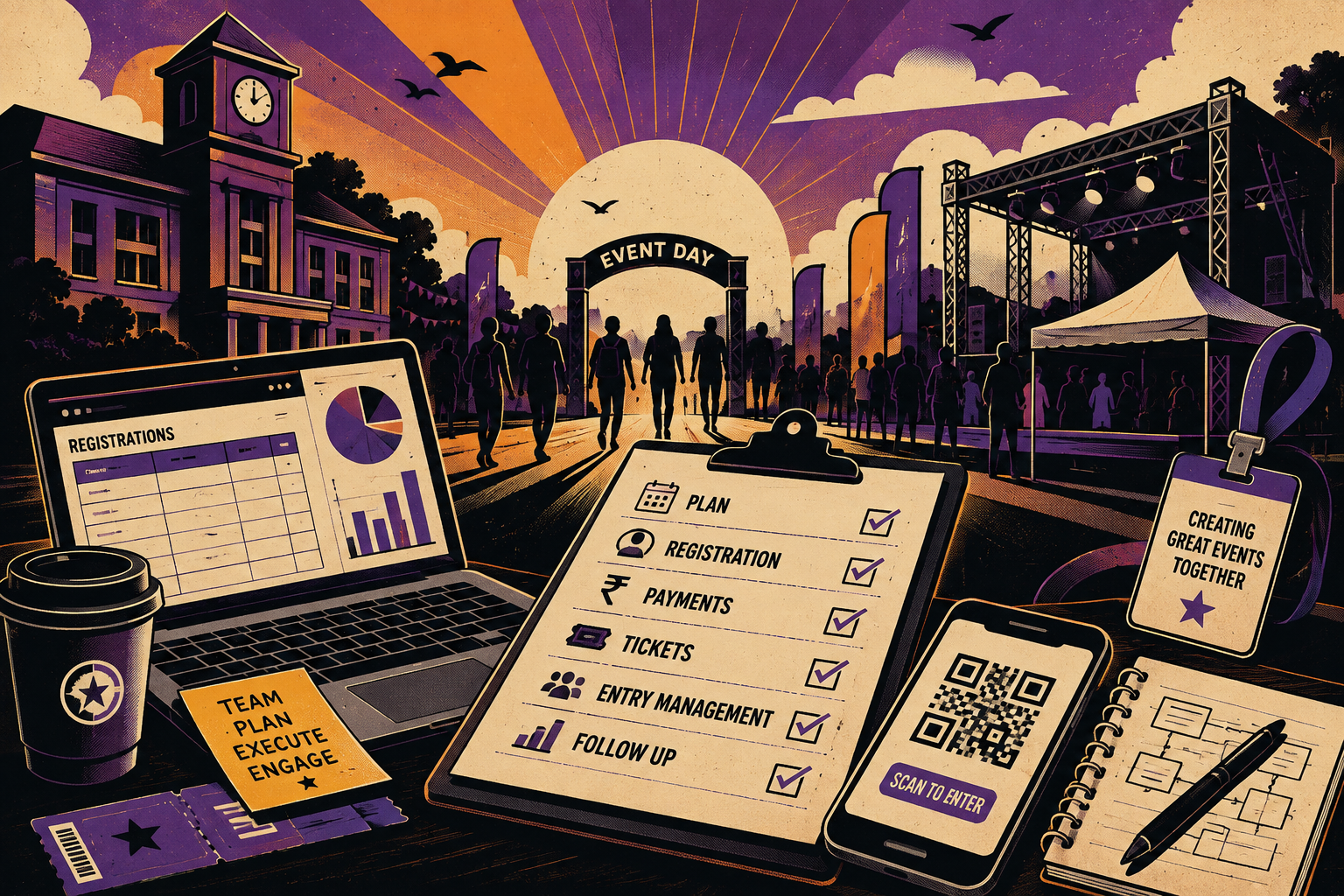
A practical, step-by-step guide to planning college events — from budgeting and registrations to payments, tickets, and entry management.
How to Organize a College Event Without the Last-Minute Chaos
Every college event organizer knows the feeling: the event itself is exciting, but the two weeks before it are pure chaos — spreadsheets multiplying, payment screenshots buried in a WhatsApp group, and someone always asking "wait, did this person actually register?" five minutes before doors open.
Here's a practical breakdown of how to plan a college event properly, without losing your mind in the process.
1. Define the Event Scope Early
Before anything else, lock down the basics: date, venue, expected footfall, and whether it's free or paid. This sounds obvious, but a huge number of last-minute problems come from changing these details after registrations have already started.
2. Design a Registration Form That Actually Fits the Event
A hackathon needs team details. A cultural night needs individual entries. A workshop might need a skill-level question. Don't reuse the same generic form for every event — build one that asks exactly what you need, and nothing more. Long forms kill registration rates.
3. Set a Realistic Capacity — and Track It Honestly
Decide your real capacity based on venue size, not optimism. And track filled seats accurately as registrations come in, so you're not overselling a 100-seat auditorium to 300 people and dealing with the fallout at the door.
4. Simplify Payment Verification
If you're not using a payment gateway, a QR code plus a screenshot upload is a reliable middle ground — it's low-cost, doesn't need business KYC, and still gives you a paper trail for every transaction. Just make sure someone is actually reviewing and approving these promptly, or your registration queue backs up fast.
5. Issue Real Tickets, Not Just a Confirmation Message
A registration confirmation text isn't the same as a ticket. Giving attendees an actual downloadable ticket — ideally with a QR code — makes entry faster and feels more legitimate than a name being manually searched on a spreadsheet at the door.
6. Plan Entry Management Before Event Day, Not During It
Decide who's scanning tickets, where the check-in point is, and what happens if someone's ticket doesn't scan. A little bit of check-in planning prevents the worst bottleneck of any event: a slow-moving entry line.
7. Keep a Record After the Event Ends
Once the event is over, you'll want data — who attended, how many no-shows there were, what worked and what didn't. This is also what makes certificates and follow-up communication possible without manually cross-checking names again.
The Bigger Picture
None of this requires expensive event-management software built for corporate conferences. It just requires treating registrations, payments, and tickets as a connected system instead of three separate manual processes duct-taped together. Get that right, and the actual event day becomes a lot less stressful — for you and for everyone showing up.